

A Three-Bureau Credit Report for Everyone

TL;DR
Equifax needed a standout product to win back consumer trust and engagement.
My team and I transformed overwhelming and indecipherable credit reports from all three bureaus into an effortless, first-of-its-kind tool for understanding your credit history and empowering you to improve. Users rated it 8.8/10 against a target of 7.5. Many said it was the first time they'd ever felt in control of their credit.
Background
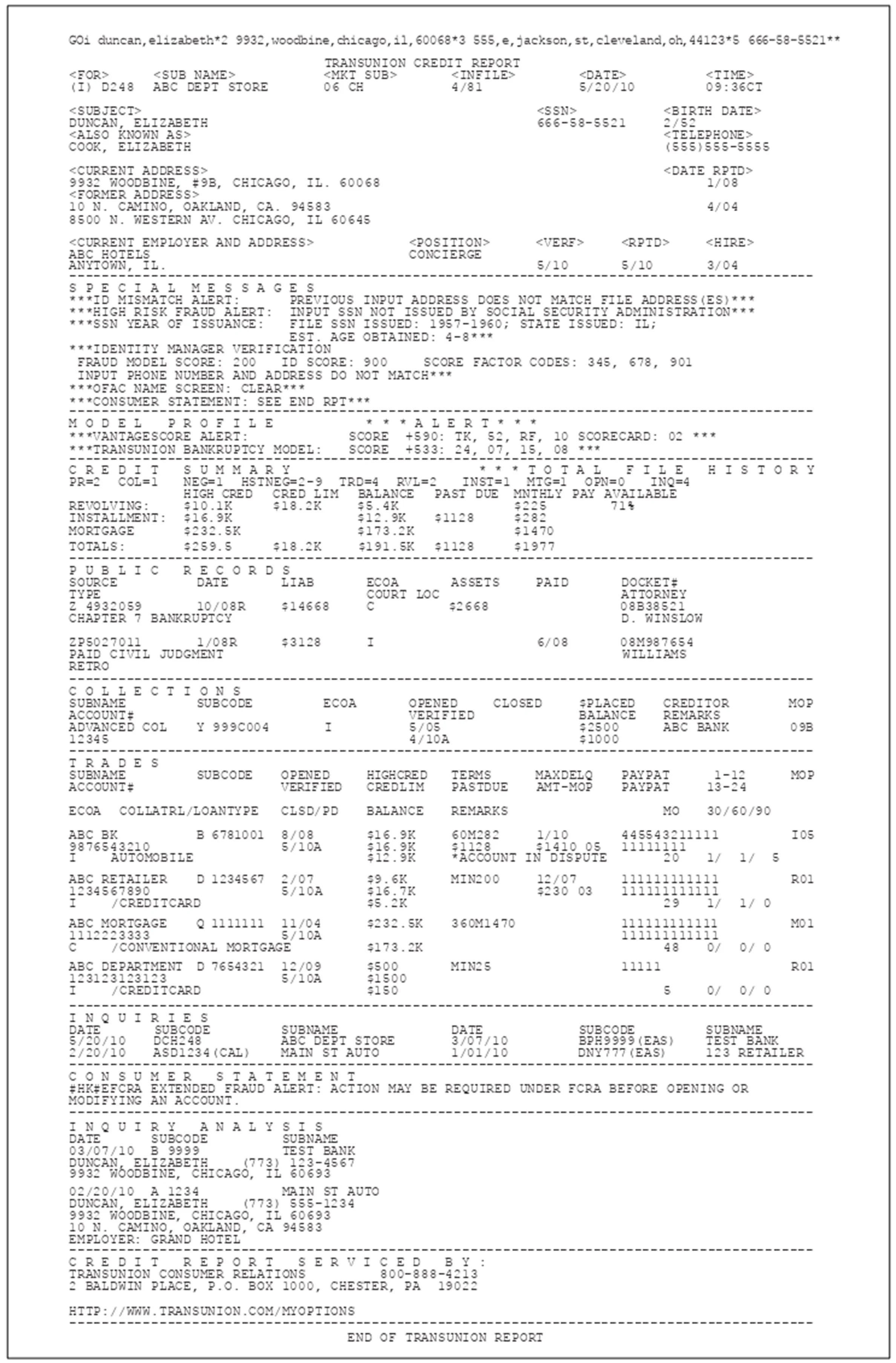
Equifax had endured a few hard years and needed to demonstrate its commitment to consumers. As the company refreshed its brand and IT systems, it went looking for premium features that would attract customers and rebuild confidence. In collaboration with our team, an idea emerged: give users the ability to view and compare their credit information across all three bureaus — Equifax, Experian, and TransUnion — and help them take meaningful steps to improve their scores.
The catch? Look at this thing. We needed to turn this (and two more reports like it) into simplicity itself.
The Challenge
Incomplete Use Cases
Equifax initially saw this as a pure data-visualization tool with no self-service or support features baked in.
Limiting Design System
Equifax’s design system was strong on basic navigation but weaker when it came to navigating data.
Missing User Guidance
The concepts behind credit scores can be tricky to say the least. Equifax’s approach to education needed to grow.
Information Overload
Credit reports are usually full of jargon-filled that most consumers find impenetrable. Our needed to be the opposite.
My Role
Led the Macquarium engagement with Equifax end-to-end
Owned discovery, product strategy, and design direction
Planned and facilitated workshops spanning customer journey mapping, affinity mapping, design co-creation, and testing review
Created conceptual and detail designs hands-on while directing junior designers across parallel workstreams
Served as primary liaison with Usability Sciences across two rounds of lab-based research in Dallas
Oversaw QA across a highly complex, multi-platform interactive prototype
Collaborated with Equifax and our project management team on scheduling, resourcing, and cost
And, just for fun, booked the hotel rooms.
Our Approach

1. Discovery & Product Strategy
We kicked off with a series of workshops to surface user pain points, technical constraints, and success metrics — anchoring everything in our twin goals of "caveman simplicity" and "educate & empower." Equifax had already carried out extensive consumer research, courtesy of a pair of brilliant internal champions of the customer-first mentality. We absorbed their data and worked with them to brainstorm a feature set that would genuinely put consumers in the driver's seat of their own credit histories.
2. Rapid Co-Creation & Concepting
Working directly with stakeholders at the whiteboard, we sketched out initial concepts — layouts, components, flows — grounded in Equifax's existing consumer research. We stress-tested everything with technical and business stakeholders as we went. Two distinct design directions emerged, each taking a different approach to organizing and presenting credit data. We developed paper prototypes of both for Dallas.
3. Working Within Constraints
Equifax had invested meaningfully in building their own design system — no small feat for an organization of that scale. Though it could have benefited from some more aesthetic polish, it was functionally solid and well-suited to navigation. Applying it to a complex, data-heavy interface pushed it into territory it hadn't been designed for yet, which meant working creatively within its boundaries rather than against them. We focused our energy on what mattered most: the clarity of the information architecture and the quality of the experience itself.
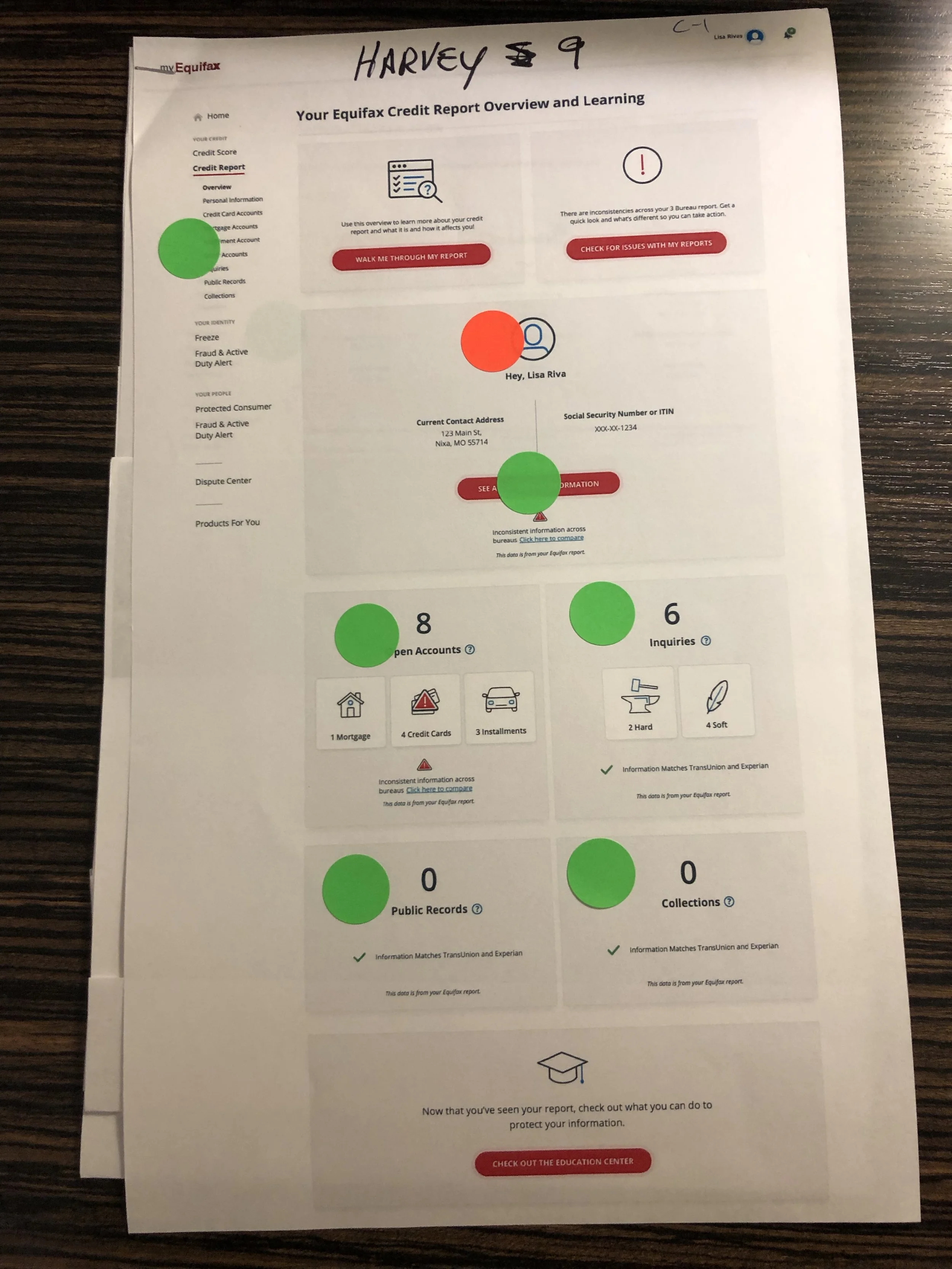
4. Lab Round 1: Focus Groups
Everyone packed their bags for sunny Dallas, where we spent three days at Usability Sciences, a user testing lab par excellence (seriously, I love these guys). Together, we ran as many as four focus groups per day to pick apart what worked and (even more importantly) what didn’t. This can be a bit of an emotional roller coaster for clients, but our champions could see that getting crystal-clear direction means that some things will be wrong on the first pass. We gathered both quantitative and qualitative feedback on our competing concepts and carried out an in-depth review workshop to refine our design direction.
5. Responsive Wireframing & Prototyping
Back home, we pushed ahead with to rework the most promising overall concept. But that kit provided enough for us to refine the concept it into a much better version of itself. We prepared highly-interactive prototype covering both desktop and mobile devices. Features were refined, additional helper elements added, and secondary & error paths accounted for. After a healthy dose of QA and more reviews with Equifax stakeholders, we were feeling downright bullish.
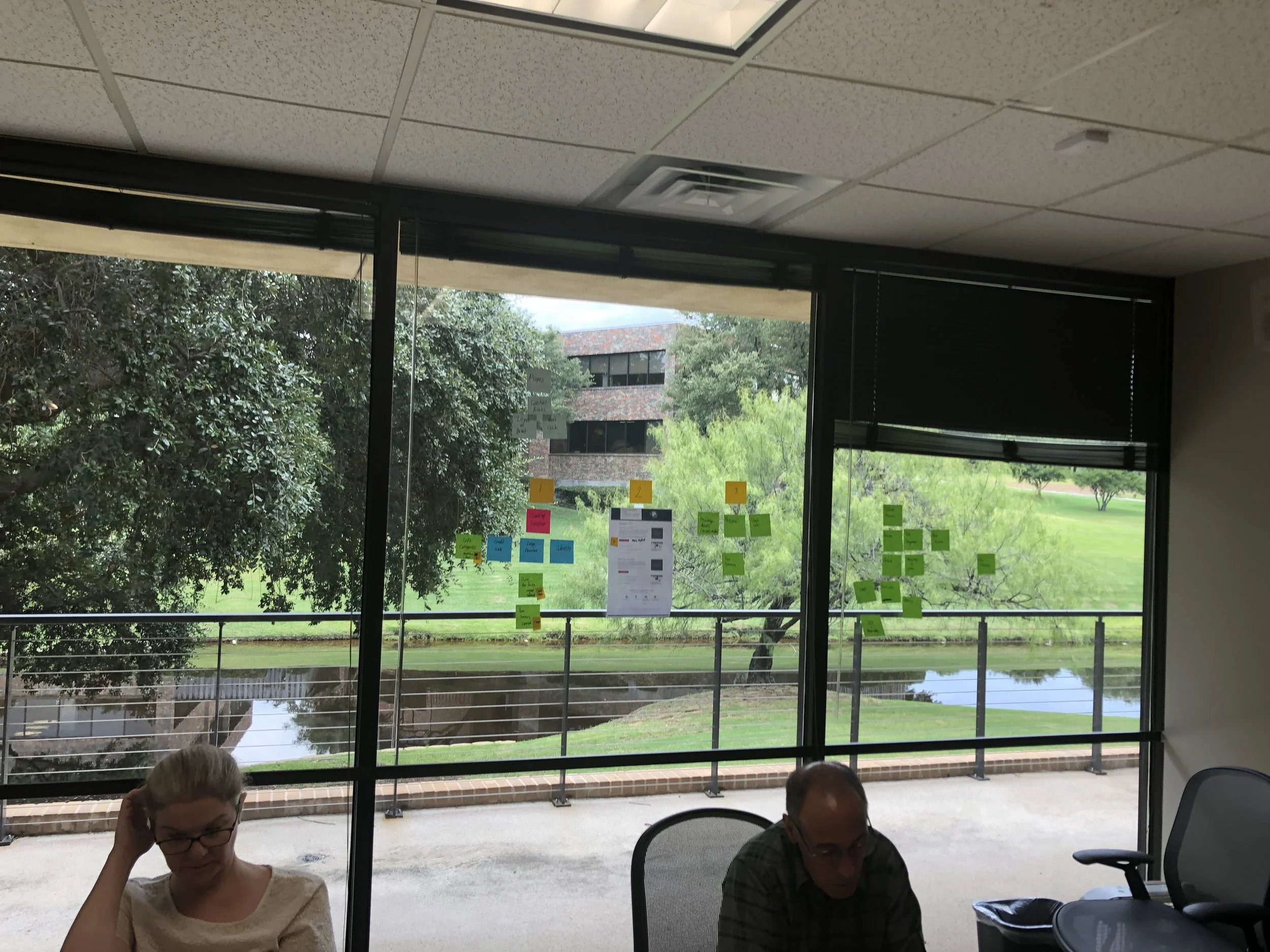
6. Lab Round 2: Usability Testing
A month after the focus groups, it was back to Dallas. This time, we knew we had the right overall direction and we strode through the airport like rock stars on our way to four days of in-person usability testing. The initial response was fantastic, but we knew we could do even better and wanted to make the most of this opportunity.
So each night we stayed up in our hotel. With the help of alarming amounts of caffeine, we refined the prototype based on the day’s feedback, tested it for quality, and shipped it for the next morning. The workshopping was so productive that we ran out of wall space and started using the windows.
After three rounds of this we were all delirious, mostly with pride. Mostly.
“It's so easy; it doesn't even feel like a credit report.”
— Lisa V., test participant
The Solution
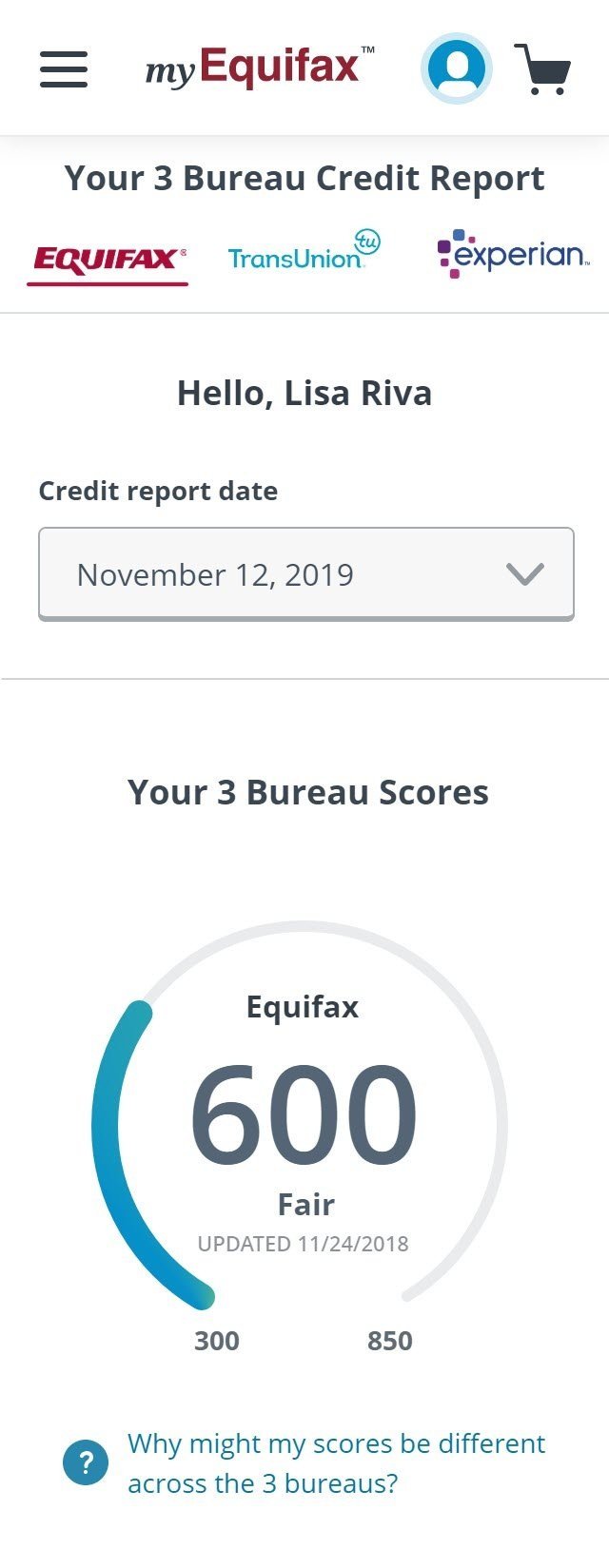
Quick score comparison and modular reporting with built-in alerts
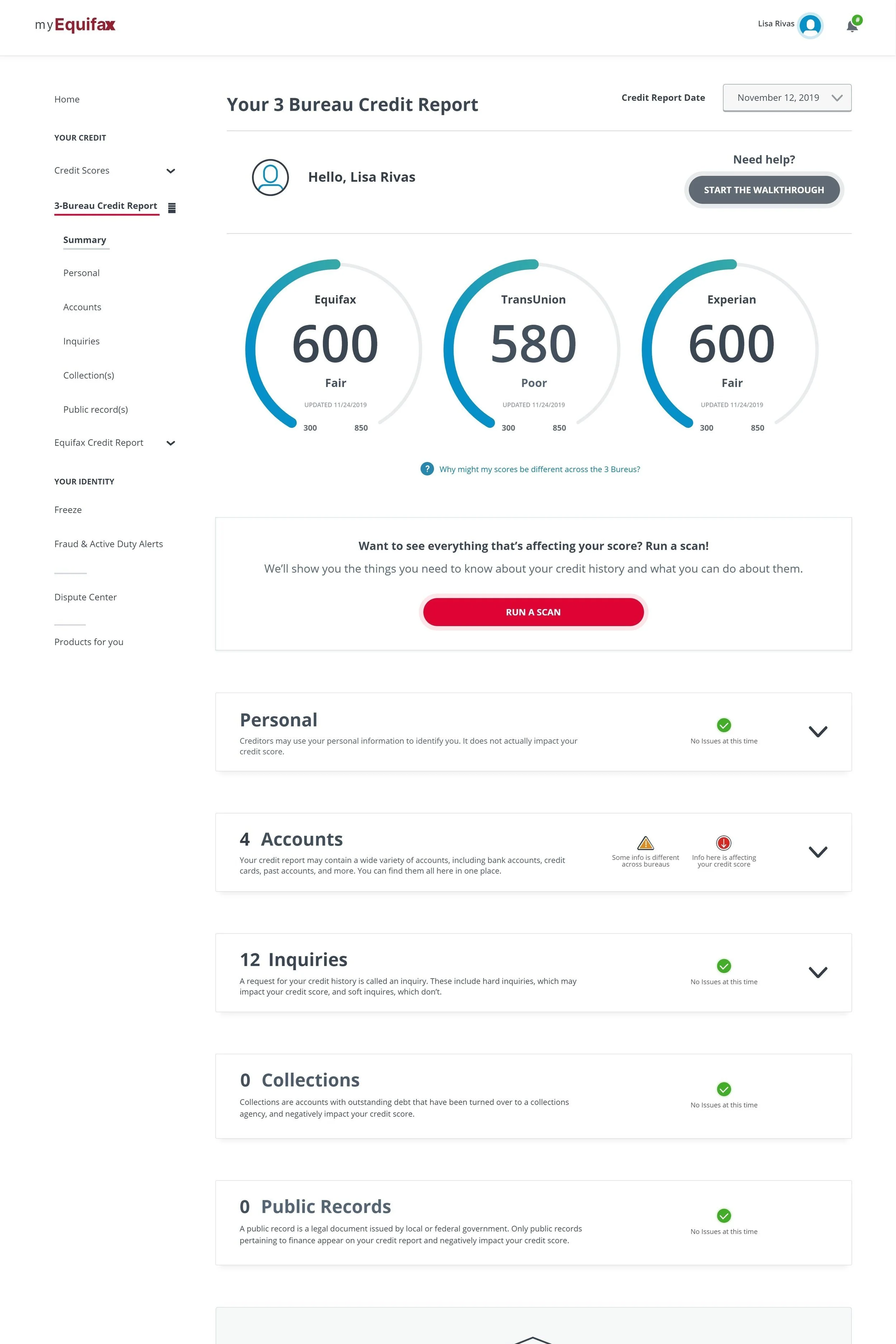
Responsive design with tabbed multi-bureau comparison
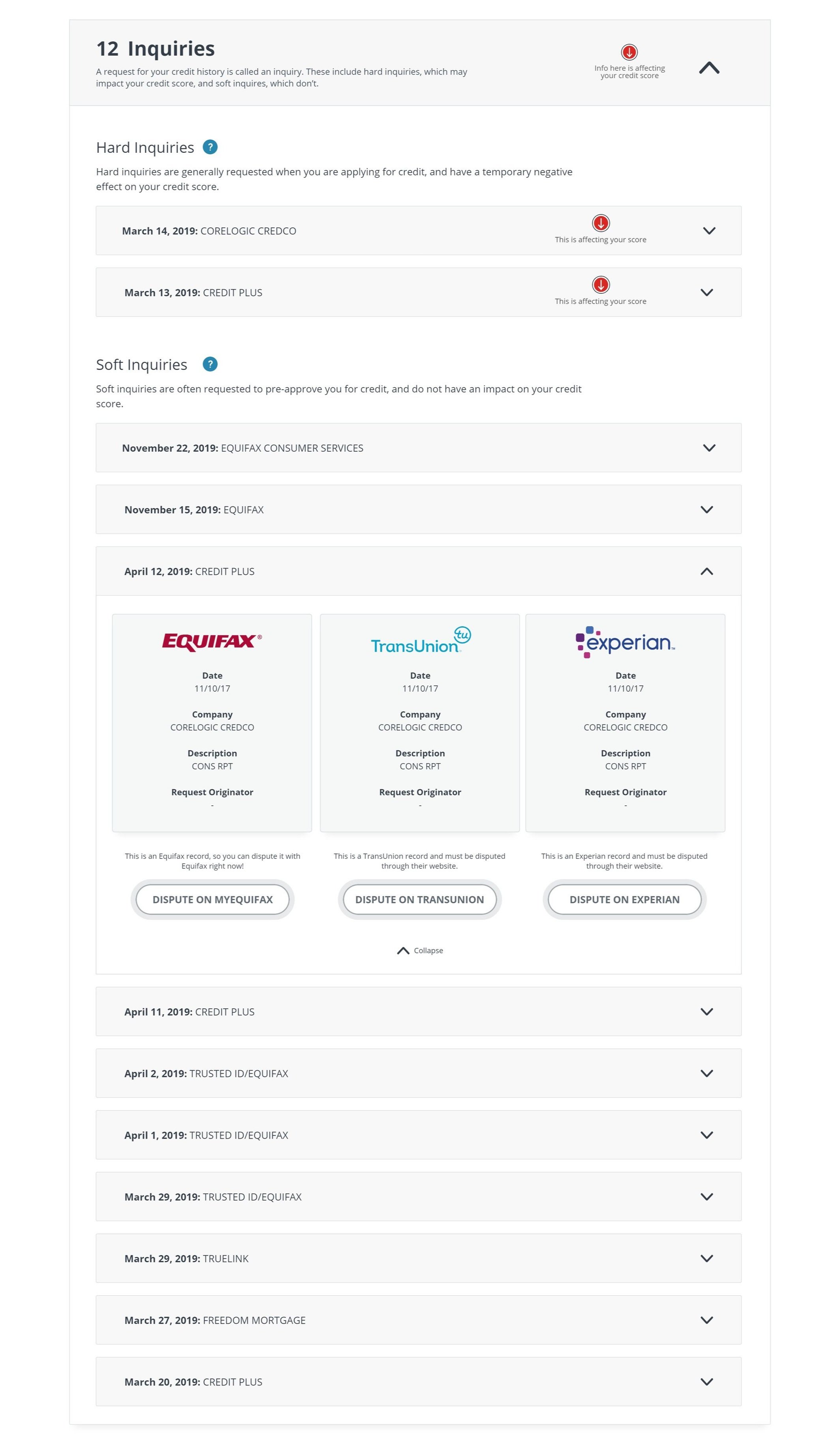
Credit history drill-down views with natural reading patterns and quick consumer actions
Mobile-optimized diagnosis and resolution of credit issues

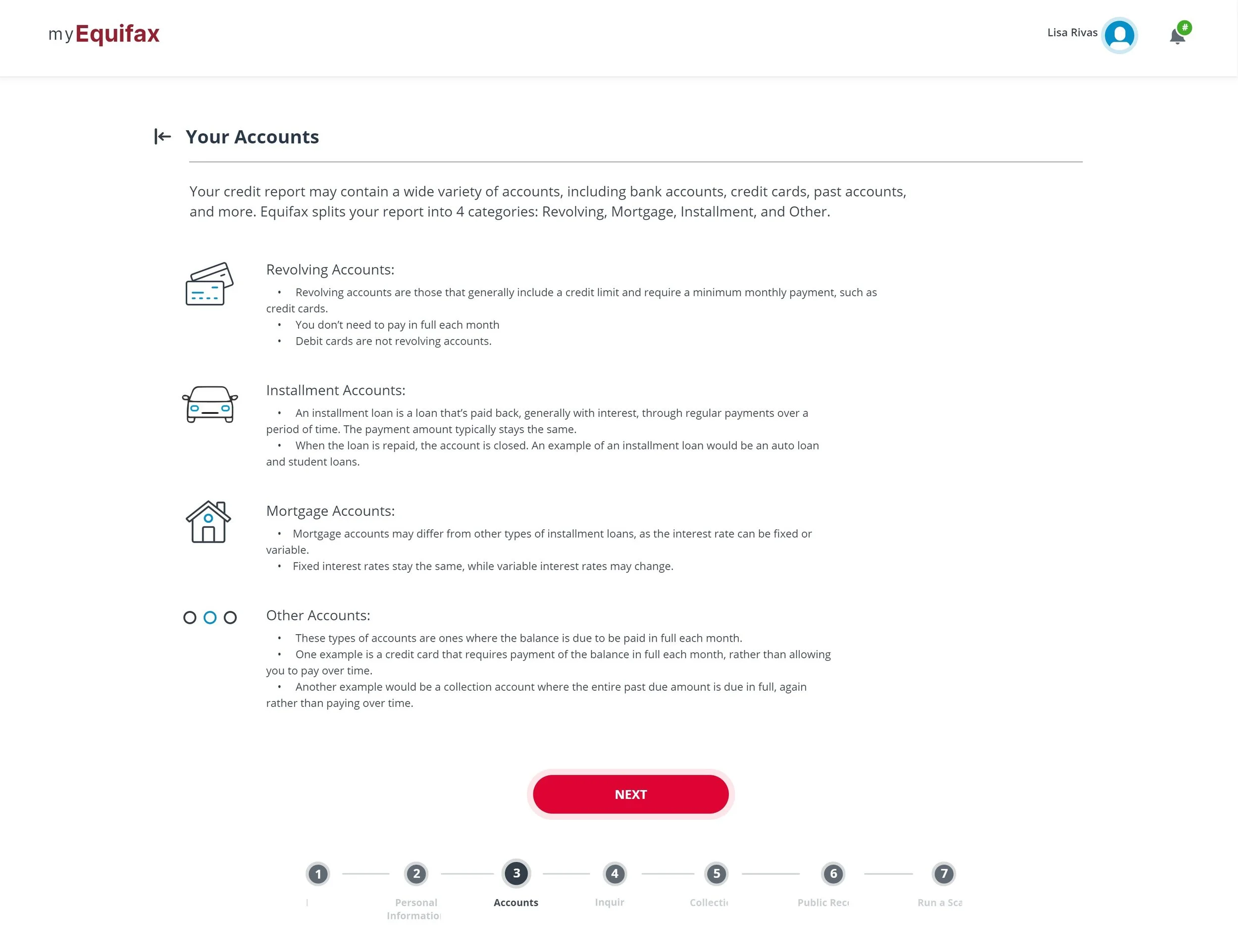
Walkthroughs and helper content to educate consumers
Focused view for quick checkups

“I'm trying to teach my daughter about managing her finances. I really want her to have this.”
— Brian G., test participant
The Results
Development was handled by Equifax's internal IT team, and analytics access was restricted by policy. Our results come from the research itself, not post-launch data. I feel confident in saying that they're no less real for it.
User Rating
8.8/10
Our goal was for testers rate our report an average of 7.5 (composite score from quantitative responses). We were able to go dramatically farther. This is why I love research.
Many testers had felt the credit system was stacked against them; the three-bureau report changed that. Many said it was the first time they'd felt truly empowered to improve their credit.
A Genuine Sense of Control
Equifax's Product, Marketing, and Customer Support teams responded with immediate enthusiasm. They knew they had a winner and quickly approved it for development.